

Life is full of surprises. Ang iba, exciting. Ang iba naman, unexpected. Kahit hindi natin ma-predict kung alin ang makukuha natin, the best we can do is prepare for them.
One good way to do that is by building an emergency fund. Magandang idagdag ito sa financial plan mo to help you face life’s surprises with confidence and peace of mind. But how much do you know about it?
Let’s find out! May mga tanong kami tungkol sa emergency fund at may tatlong choices ang bawat isa. Two statements are true, and one is a misconception.
Can you spot the misconception?
-
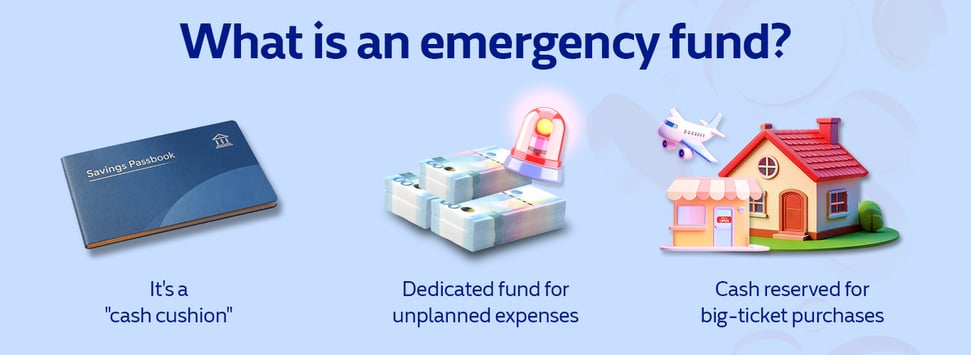
An emergency fund is also known as a “cash cushion” kasi kaya ka nitong suportahan at i-soften ang impact ng mga unexpected situations gaya ng job loss, natural calamities, etc.
-
It is a dedicated fund for life’s surprises. Setting aside an emergency fund can help you in these scenarios para hindi mo na kailangang galawin ang iba mong savings o mag-rely sa utang.
-
Hindi ito dapat gamitin para sa “wants” o mga impulse purchase. Separate it from your other budgets or savings goals like owning a home, starting a business, or traveling to a dream destination.
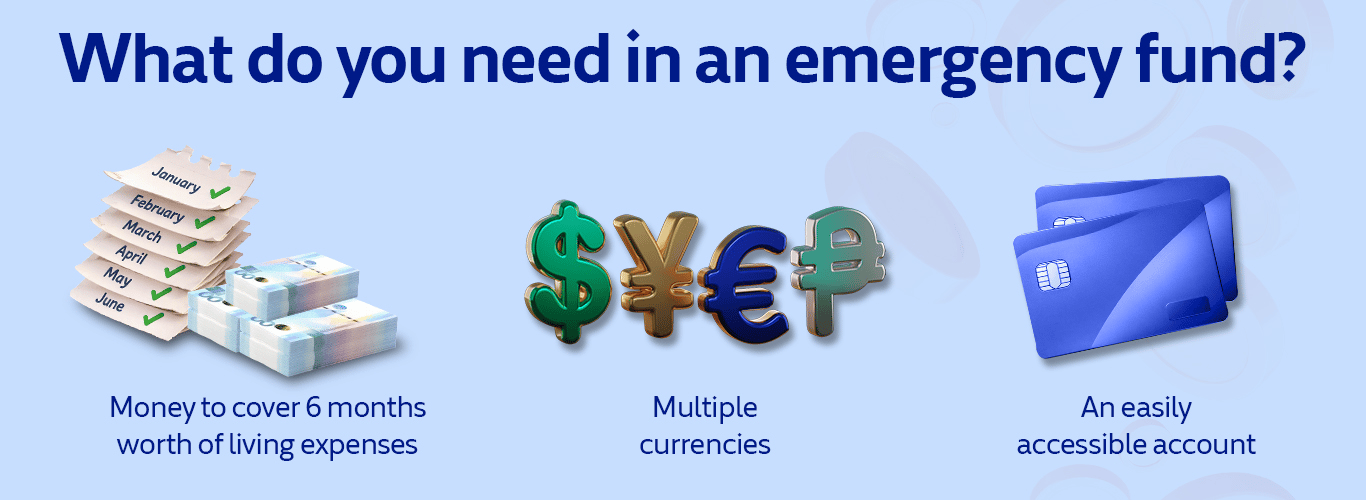
- 6 to 12 months’ worth of living expenses ang recommended value ng emergency fund para sa mga single. If you’re married, ang recommendation ay 1 to 2 years’ worth para financially ready ka pa rin for situations like sudden job loss.
- Hindi mo kailangan mag-ipon ng pera sa ibang currency. Ang importante lang ay naka-base ito sa living expenses mo.
- Access to an emergency fund needs to be easy para madali mong ma-settle ang mga unexpected expenses kailan man ito dumating. This means being able to transfer money or withdraw cash without having to wait.
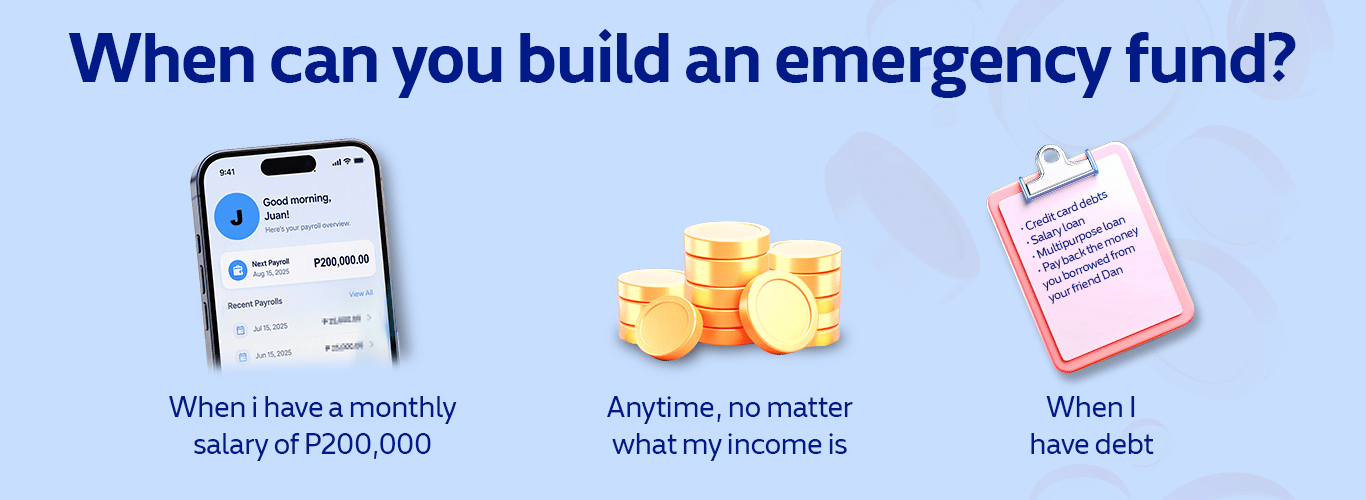
- Hindi lang pang-mayaman o high-income individuals ang emergency fund. Magkakaiba man ang amount na kailangang ipunin, pareho lang ang discipline na kailangan para mabuo ito.
- You can start anytime. Maliit man o malaki ang ipon mo, pwedeng-pwede ka nang magsimula. Kailangan mo lang mag-set ng monthly savings goal para sa iyong emergency fund na naka-base sa income, expenses, at financial situation mo.
- You can do it while you’re paying off debt. I-explore lang ang mga budgeting methods at mag-set aside ng portion ng income mo para sa emergency fund.
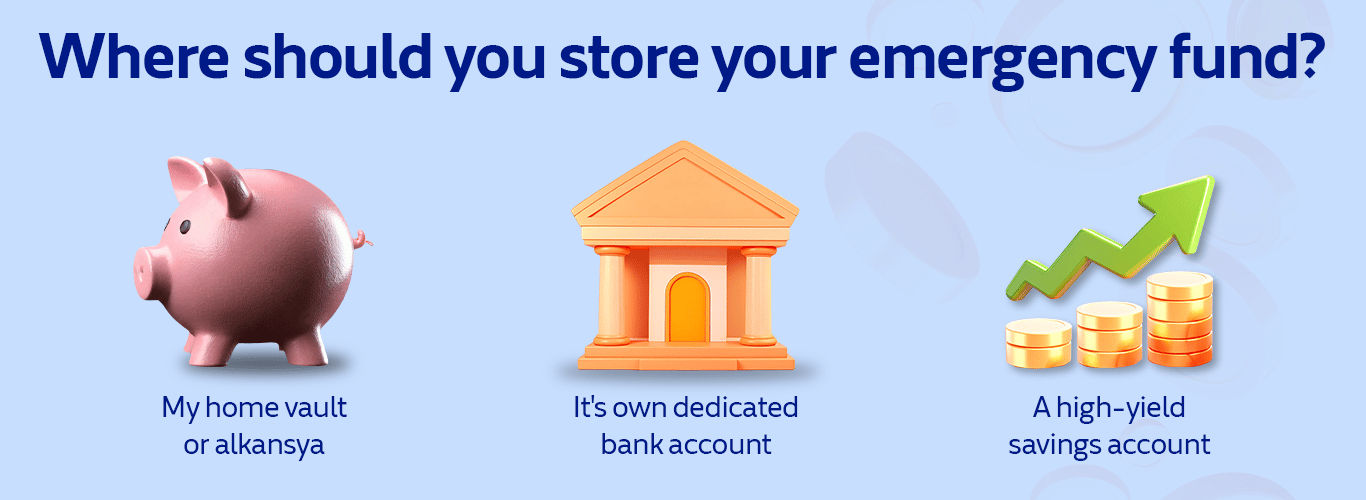
- It’s not advisable to keep your emergency fund at home dahil may risk ka na magamit o manakaw ito, o mawala dahil sa mga natural calamities. Hindi rin ito accessible kung kailanganin mo ito sa labas ng bahay.
- Magandang ilagay ito sa hiwalay na savings account para madaling i-track ang pag-iipon at hindi ito magamit sa ibang bagay.
- Good tip ilagay ito sa high-yield savings account if possible. Safe at accessible pa rin, at makaka-earn ka pa ng interest.
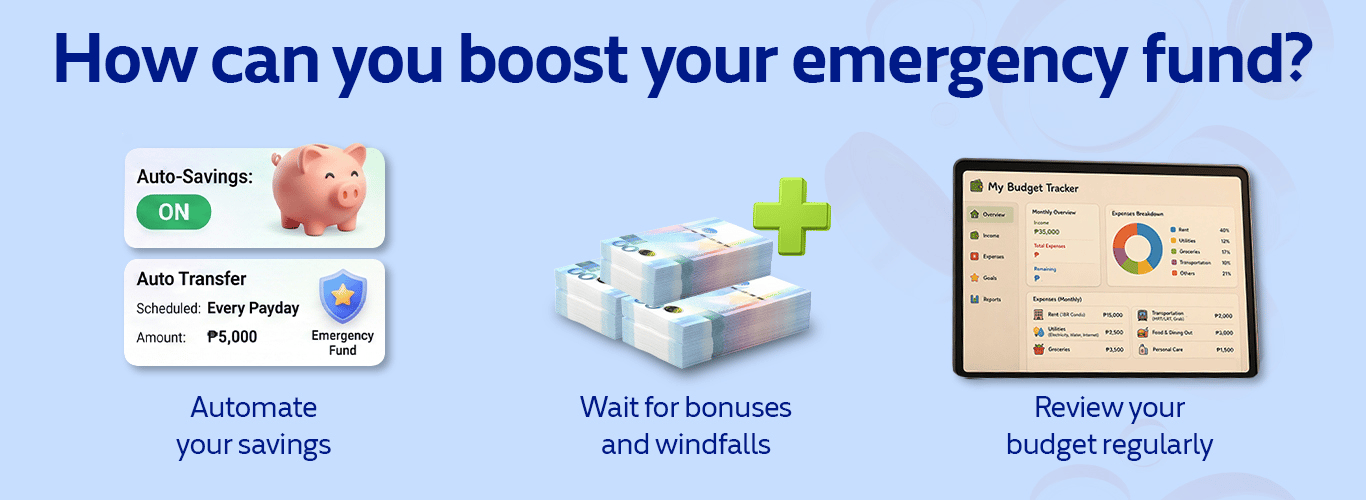
- Automating your savings for an emergency fund can help you save consistently without having to think about it every time. Pwede mong i-set tuwing payday para maiwasang magastos ito.
- Hindi lang dapat hintaying may bonus o financial windfall na dumating. You should treat your emergency fund as a financial commitment na mayroong fixed budget every month.
- It’s good to check your emergency fund strategy often. Maraming pwedeng magbago in a few months. Pwede mong i-review kung aligned pa rin ang savings plan mo sa iyong current situation, o kung may adjustments ka pang pwedeng gawin to help you reach your goal amount sooner.
Ilan ang misconception na nakuha mong tama? May last truth kami para sa ’yo. Building an emergency fund is not about expecting the worst, but feeling prepared to take on life’s surprises. With an emergency fund, you can find peace of mind as you plan your next move when unexpected situations arise.
Hindi mo kailangan ng perfect income o perfect savings plan. Start with what you can, stay consistent, and let your emergency fund grow alongside your goals.
Read more in our free Earnest E-book. See pages 92-102 to learn what you should save for.
For more financial tips, follow @earnestph on Instagram and TikTok.
Disclaimer: This article is for general information purposes and does not constitute formal financial advice. Always do further research before making financial decisions and seek professional advice from a certified personal finance counselor. For more information, read the Earnest disclaimer here.